
01
Keep quotes attached to a decision.
Use the pipeline to distinguish an active quote from an early enquiry. Give unanswered questions a task and an owner.
- Deal value and stage
- Quote documents
- Follow-up ownership
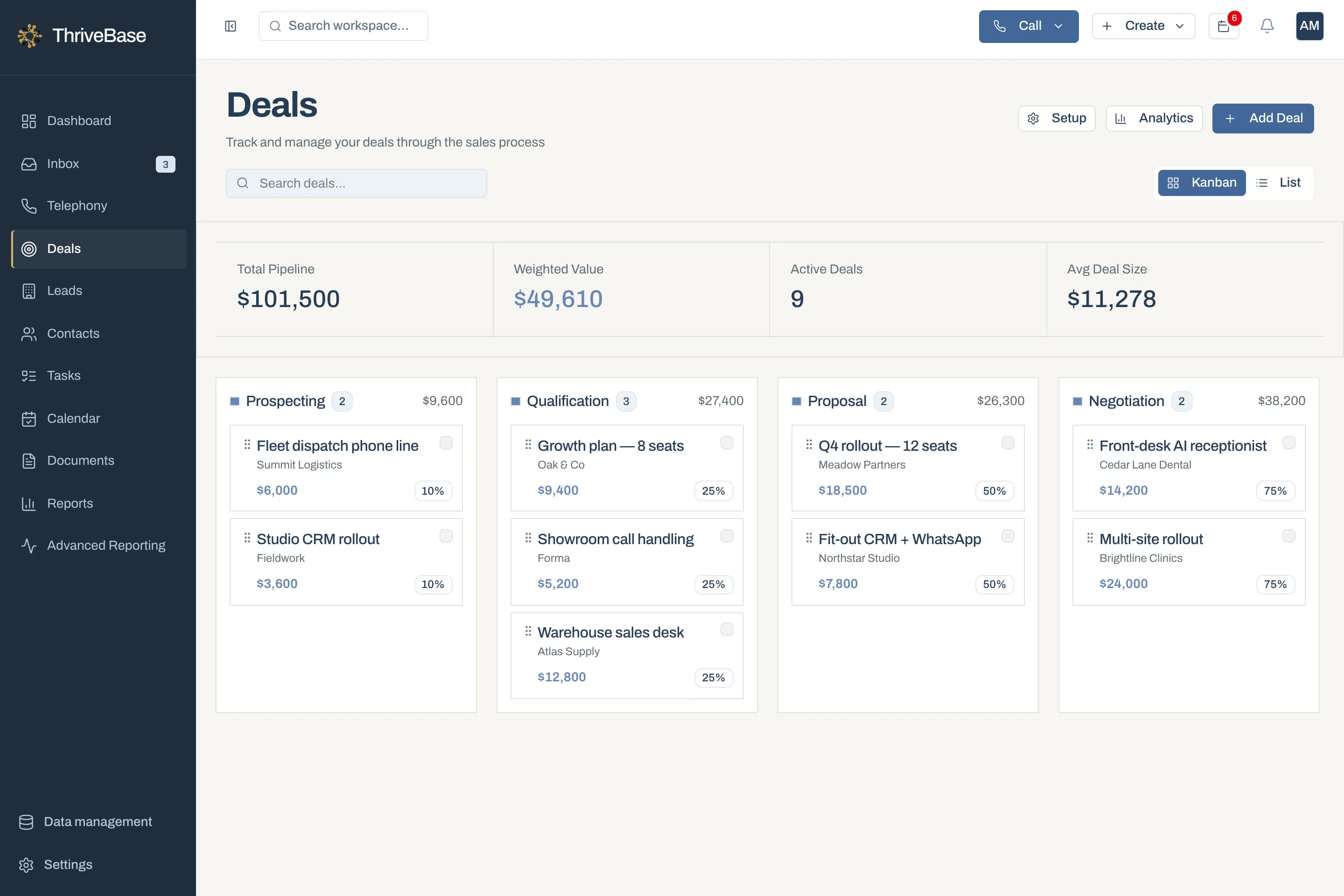
Manage trade enquiries, buyer conversations and quote follow-ups with enough account context for a colleague to pick up the next call.
An example business and workflow, informed by industry research. Not a customer testimonial or a claim of measured results.
A distributor supplying packaging and operating materials to business buyers.
Inside sales, account managers and a sales manager.
Give each sales lead an owner, useful context and an agreed next action.
The starting point
A buyer asks for a quote while another contact discusses delivery requirements. The account manager is away, and the person covering cannot see which terms were discussed. The next order depends on recovering that context.
Lead sources
Capture website, email and phone enquiries with company details and the requested product category.
Import permitted trade-event contacts or add introductions manually, preserving the reason for the follow-up.
Create an opportunity for a new requirement or repeat purchase while retaining the contact history.
The workflow
A regional retailer asks about packaging for a new store. Inside sales records the company, buyer, quantities and required date, then assigns an account manager.
The account manager establishes who specifies the requirement and who approves the purchase. Notes capture the practical constraints and any questions for operations.
The team prepares a quote through its existing pricing process and shares the document. The opportunity records expected value and stage; stock and credit checks stay in the appropriate systems.
The buyer requests a revised quantity. A task names who will answer, and the account manager updates the notes and proposal rather than relying on a remembered phone conversation.
After confirmation, the account manager updates the deal outcome and records the purchase reference. Order entry and fulfilment proceed through the distributor’s order-management system.
The manager sets an agreed account-review or replenishment discussion as a task. Before calling, they check actual order information in the commerce or ERP system and review the previous CRM conversation.
Inside ThriveBase
Use contacts, notes and connected conversations to preserve the account context. Record decision roles explicitly so the next person knows whom to ask.
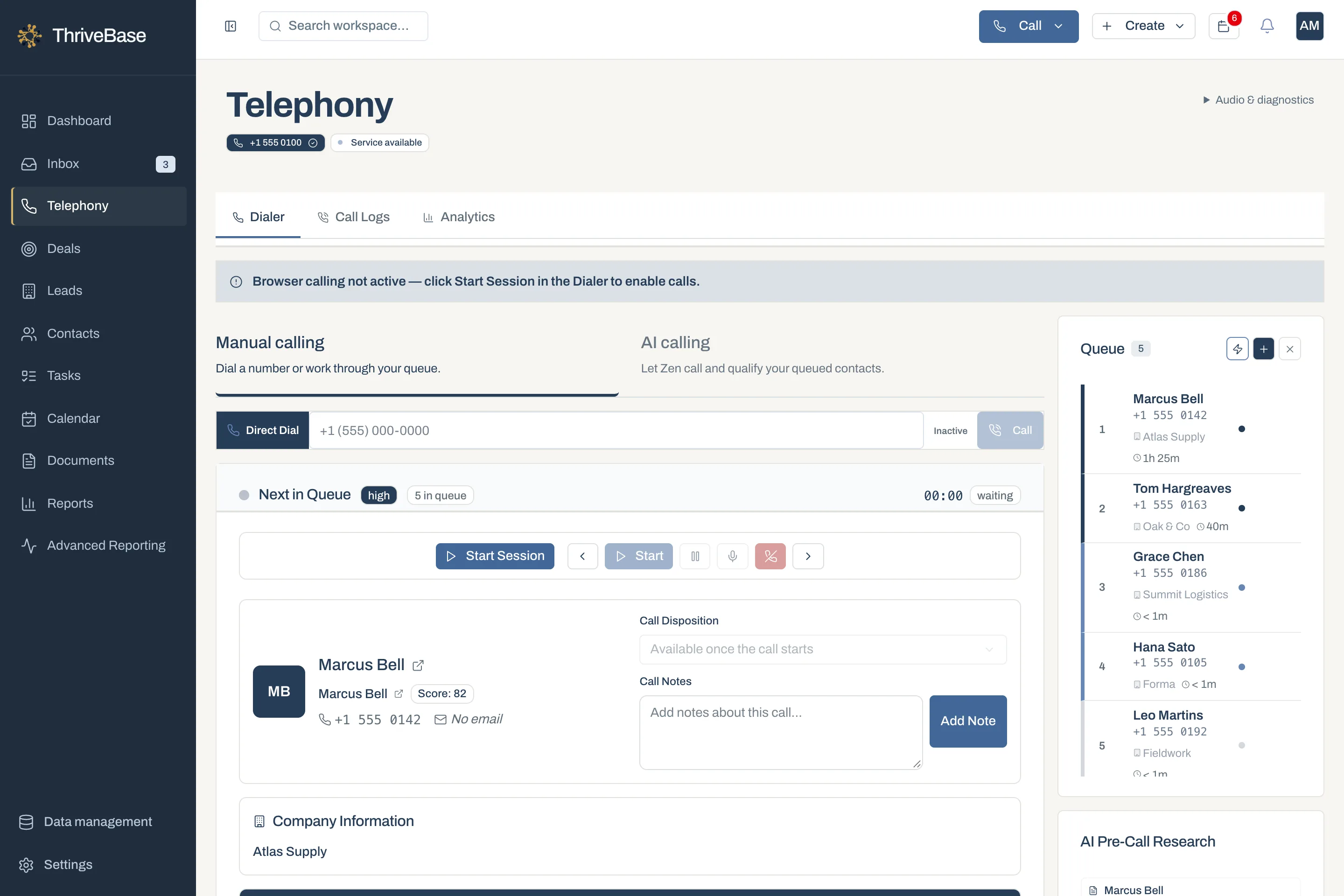
01
Use the pipeline to distinguish an active quote from an early enquiry. Give unanswered questions a task and an owner.
02
A scheduled review gives the account manager a reason to reconnect. Record what the buyer needs next, rather than assuming every account wants the same message.
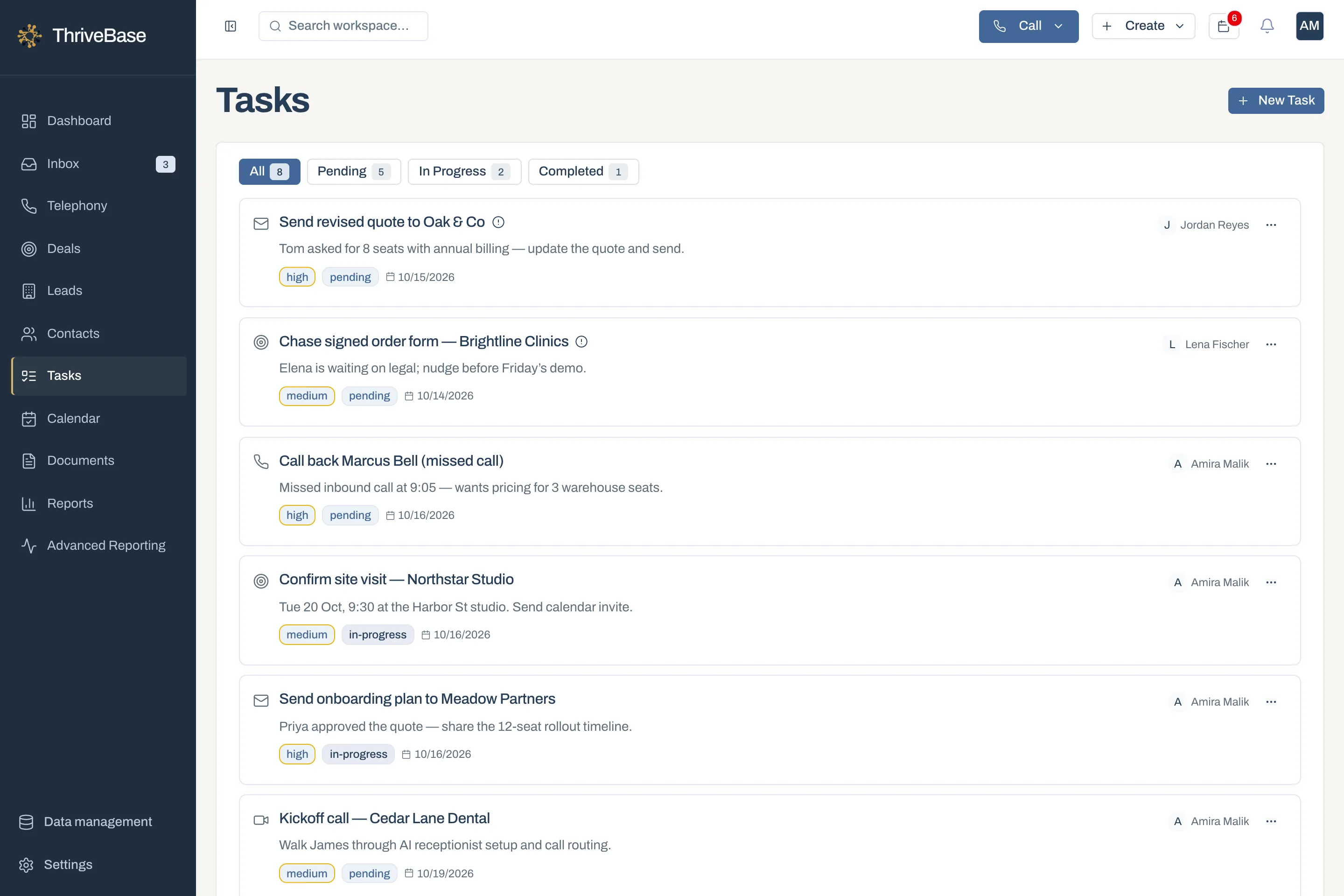
Team handover
Captures the initial requirement and buyer context.
Owns the quote discussion and next opportunity.
Reviews pipeline and unresolved account actions.
What to measure
Review quoted opportunities against recorded purchase decisions.
Check overdue review tasks and opportunities without a next action.
Reconcile CRM opportunities with confirmed orders in the order-management system.
Suggested review measures, not claimed results or a promise of built-in dashboards. Establish a baseline and compare consistent periods using CRM records, exports and your operational systems.
This scenario uses your existing pricing, inventory and order systems. It does not assume live ERP synchronisation, stock visibility or automatic price calculation.
No. A won deal records a sales outcome. Your team still creates and confirms the order in its authoritative order system.
Industry sources informed the business context. The example workflow is our application of that context to ThriveBase, not an endorsement by these publishers.
B2B selling involves qualification and an ongoing account relationship. This example follows an initial enquiry through a quote decision and a later reorder conversation.