
01
Give every proposal a next conversation.
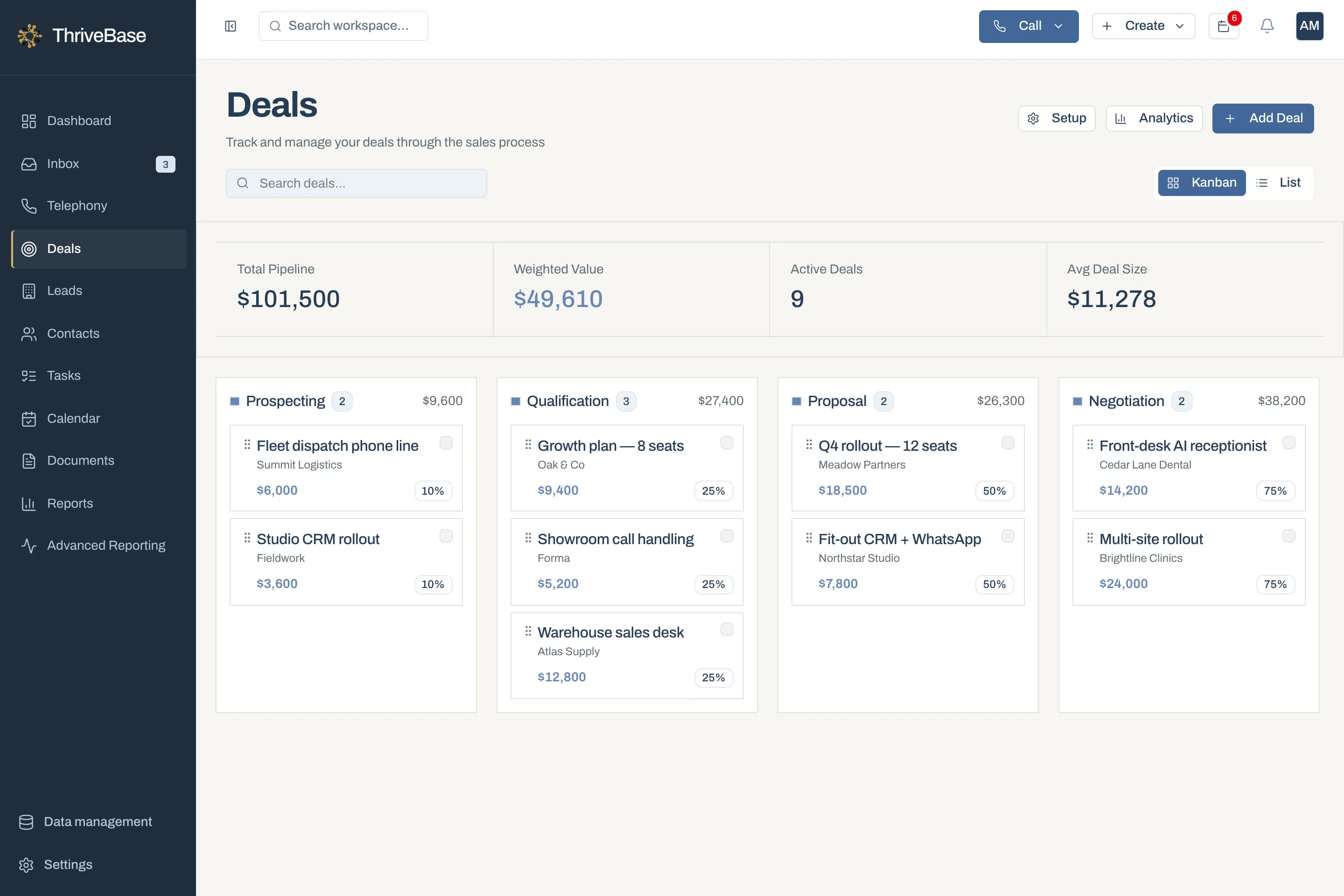
A proposal is one step in a decision. Keep its opportunity and follow-up visible while the client considers the engagement.
- Expected value and deal stage
- Prepared documents
- Decision follow-up tasks
Bring introductions, discovery notes, proposals and account reviews into a clear relationship workflow for your consulting team.
An example business and workflow, informed by industry research. Not a customer testimonial or a claim of measured results.
An operations consultancy selling scoped advisory engagements and ongoing support.
Partners, consultants and a client coordinator.
Give each sales lead an owner, useful context and an agreed next action.
The starting point
A promising introduction turns into several meetings. The partner holds the commercial context, a consultant holds the discovery notes and the client coordinator handles dates. Without a shared record, a handover can lose the very problem the client wanted solved.
Lead sources
Record the referral context and relationship owner before arranging the first conversation.
Add website, email and phone enquiries through the appropriate connection, import or manual record.
Track a new scope or renewal as an opportunity with its own decision and follow-up.
The workflow
A former client introduces a business with a fulfilment problem. The partner records the context, contact and reason for the conversation, then assigns the next step.
The consultant clarifies the problem, desired outcome, timing and decision process. Notes distinguish what is known from what still needs investigation.
The team schedules a scoping conversation and assigns any preparation. Before writing a proposal, it records the intended boundaries and the questions the client must resolve.
The partner shares a prepared proposal and records the opportunity value and stage. A follow-up task names the person responsible for discussing the decision.
Once the client confirms, the team updates the sales outcome and shares the brief, agreed document and key commitments with the delivery lead. Delivery plans and time recording stay in the consultancy’s specialist tools.
A scheduled review creates space to discuss progress and future needs. Any additional engagement becomes a new opportunity, so the original scope and the next decision remain distinct.
Inside ThriveBase
Use the lead record to preserve why the client approached you. Good notes make the next conversation useful without requiring the partner to repeat the whole introduction.
01
A proposal is one step in a decision. Keep its opportunity and follow-up visible while the client considers the engagement.
02
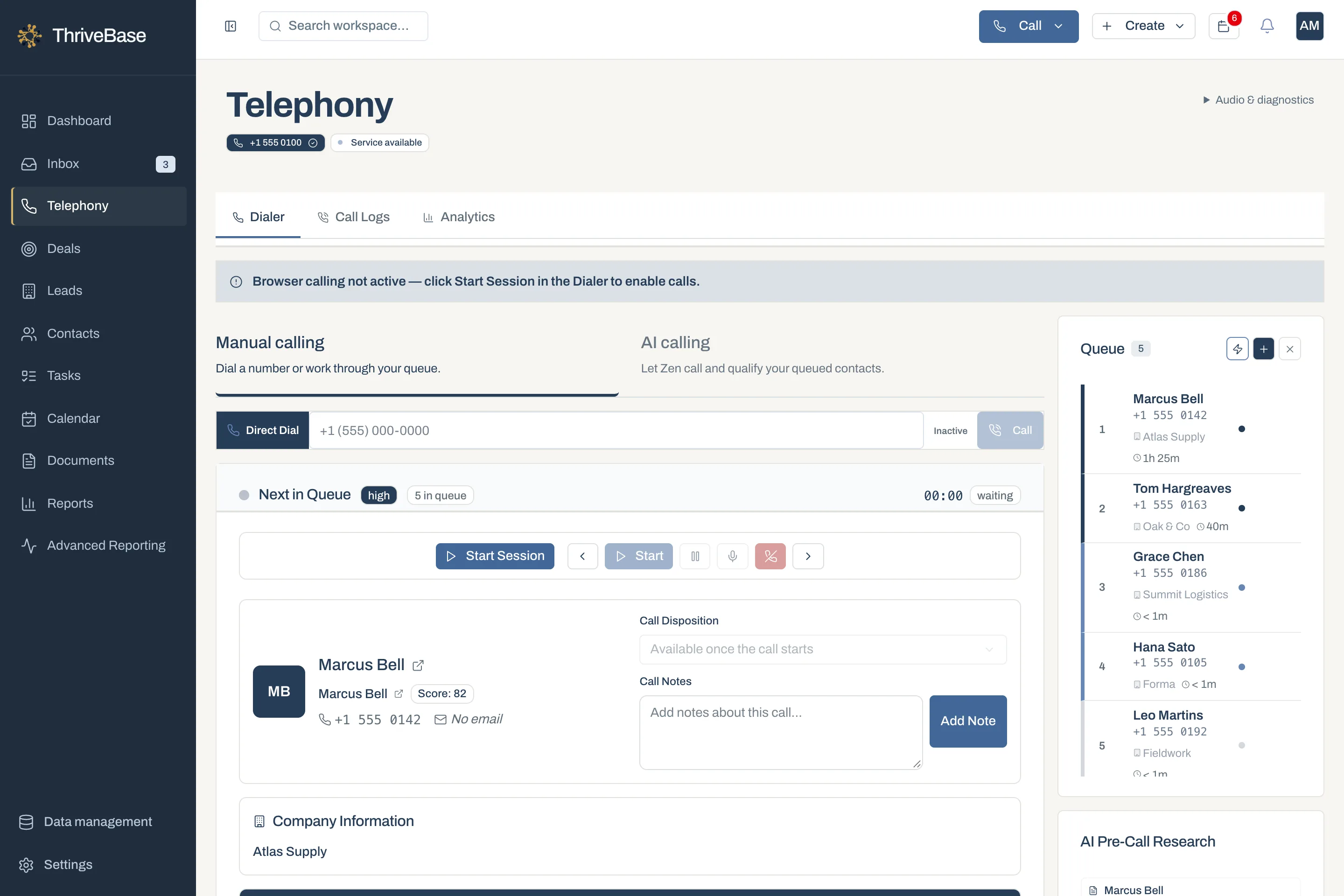
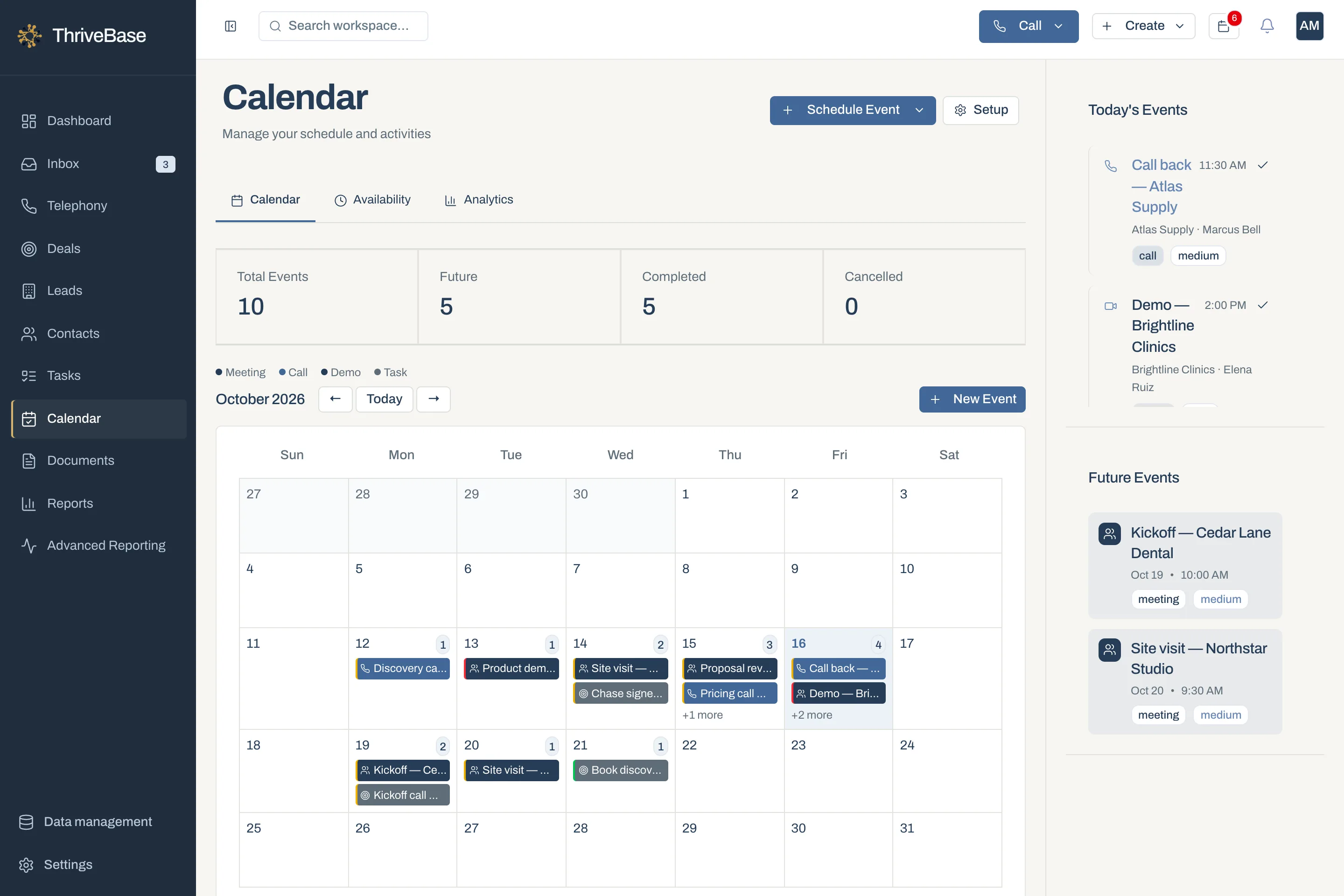
Use appointments and tasks to support the ongoing relationship. AI drafting can assist with routine preparation when configured, with a consultant reviewing the output.
Team handover
Owns commercial fit and the client relationship.
Records discovery and confirms the proposed scope.
Organises appointments and follows up on assigned actions.
What to measure
Review opportunities with a recorded problem, timing and decision process.
Check that open proposals have an owner and an agreed next conversation.
Review completed client check-ins and separately recorded new engagements.
Suggested review measures, not claimed results or a promise of built-in dashboards. Establish a baseline and compare consistent periods using CRM records, exports and your operational systems.
This example covers the client relationship and sales process. Keep project accounting, time recording and detailed delivery planning in your specialist tools.
An authorised colleague can use the saved notes, records and conversation context. Access depends on your workspace’s role and visibility settings.
Industry sources informed the business context. The example workflow is our application of that context to ThriveBase, not an endorsement by these publishers.
Discovery should uncover the business problem and establish a concrete next step. This example carries those decisions into scoping and handover.