An example business and workflow, informed by industry research. Not a customer testimonial or a claim of measured results.
The business
An online homeware brand selling to individual shoppers, interior designers and trade buyers.
The team
A founder, sales advisers and a customer-care team.
The goal
Give each sales lead an owner, useful context and an agreed next action.
The starting point
Interest is coming in. What happens next?
The campaign brings people in. The difficult part starts afterwards: a designer emails a brief, a shopper messages on WhatsApp and a retailer asks about a bulk order. When those conversations sit in separate places, nobody has a reliable view of who is interested, what they need or who should follow up.
Lead sources
Bring the opportunities into view.
Campaign and website leads
Bring identifiable form submissions through a configured lead-capture connection or import. Record the campaign context so the first conversation starts with what brought the person in.
WhatsApp, email and calls
Work connected conversations in the inbox. Record a phone enquiry or referral as a lead, with the requirements and person responsible for the reply.
Trade and repeat business
Keep designer briefs, reseller requests and existing-customer opportunities visible. A repeat buyer should not have to explain their business from the beginning.
The workflow
Follow one opportunity through.
01
Gather the leads worth working
A designer submits an enquiry for a furnished apartment project. The team records the source, contact details and brief. An adviser takes ownership. Other campaign leads, referrals and chat enquiries enter the same working list through the appropriate connection, import or manual entry.
02
Qualify the buying need
The adviser establishes the product range, quantity, budget and required date, then saves the answers in notes. A retail question gets a direct answer; the project enquiry becomes a deal because it needs a quote and a buying decision.
03
Keep the conversation together
The designer switches from email to WhatsApp. The adviser checks the customer record before replying and records any new requirements. If a colleague covers the conversation, the brief and previous commitments are available to them.
04
Make the next action explicit
The adviser shares a prepared proposal document, records the deal value and creates a dated task to discuss it. If the designer needs more time, the adviser updates the follow-up instead of leaving the opportunity indefinitely in the inbox.
05
Confirm the sale and hand it over
Once the buyer confirms, the adviser updates the deal outcome and records the order reference supplied by the commerce team. A handover task captures what customer care needs to know. Stock, checkout and fulfilment remain in the store’s existing systems.
06
Build the next opportunity
After the agreed delivery date, customer care checks in and records any outstanding issue. With the customer’s agreement, the adviser sets a reminder for the next project. The manager reviews open deals and overdue work without treating every support request as a new sale.
Inside ThriveBase
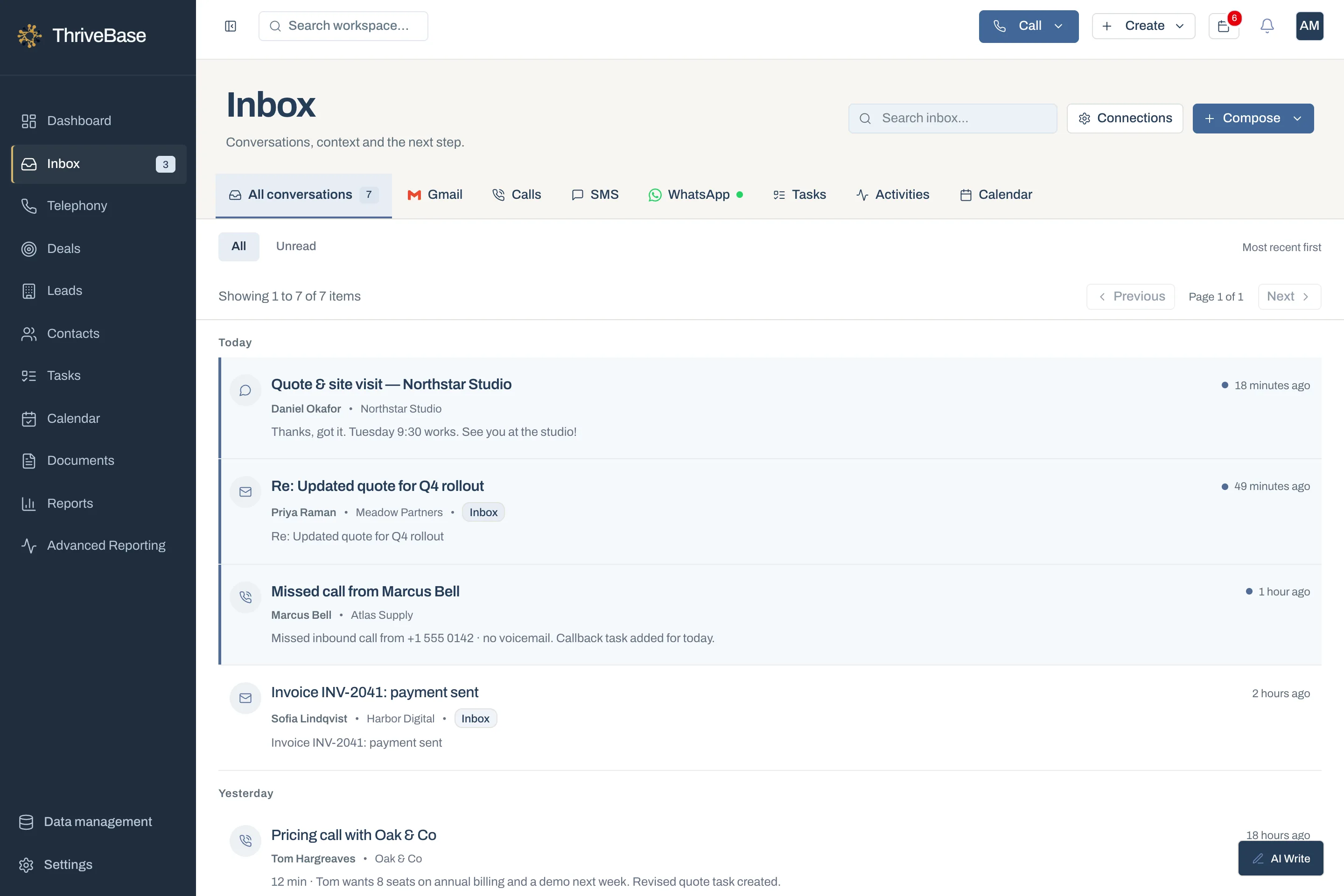
A working queue for all your enquiries.
Use the shared inbox to handle connected conversations, then use lead records to organise the sales work around them. The owner and next action matter as much as the message.
ThriveBase product screen with demo data. Illustrates the workspace, not the business or results described above.
01
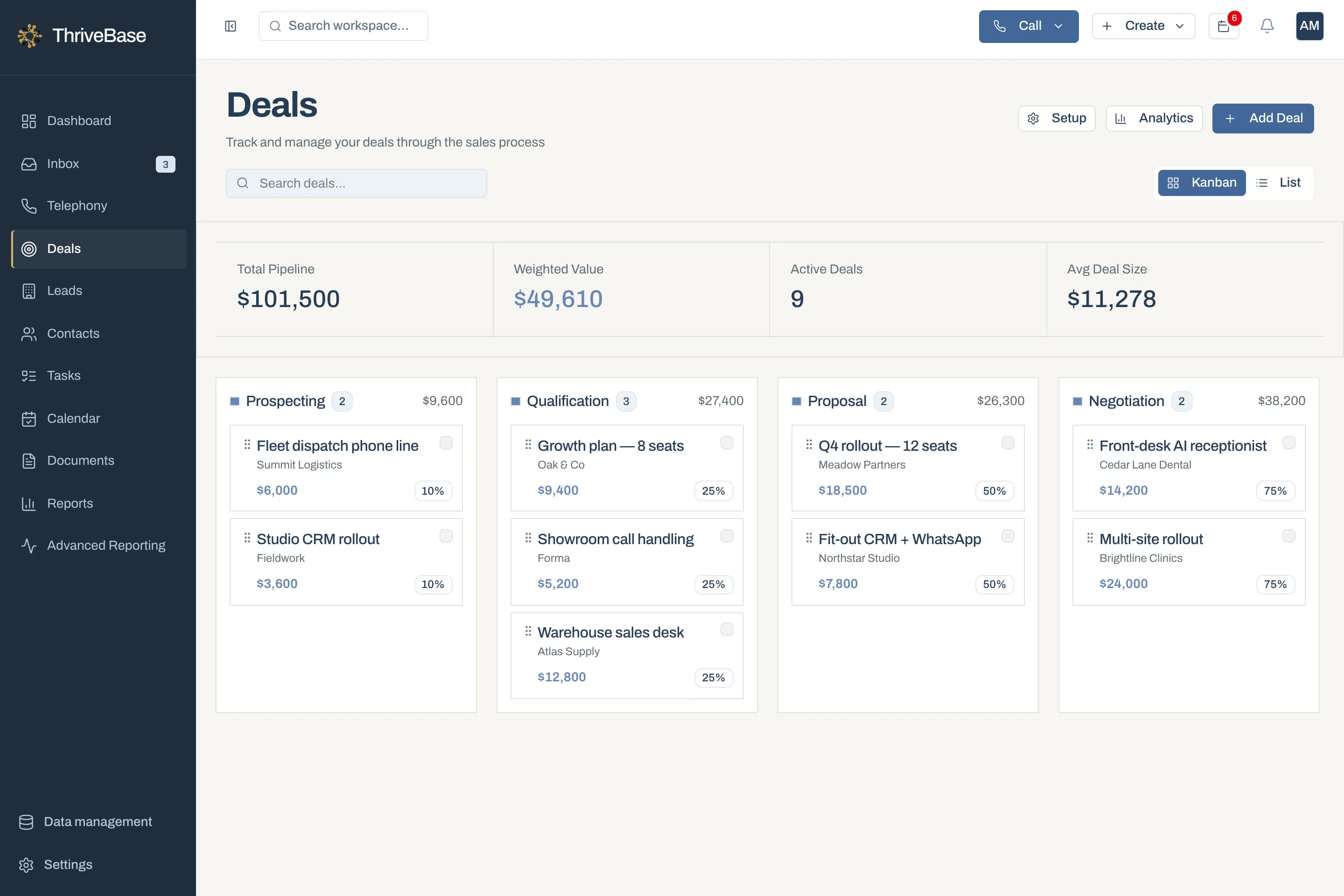
A pipeline for sales that need a conversation.
A trade order or considered purchase may need a quote, a call and an approval. Record those opportunities as deals so the team can distinguish active buying decisions from general questions.
Deal value and stage
Proposal documents shared with the buyer
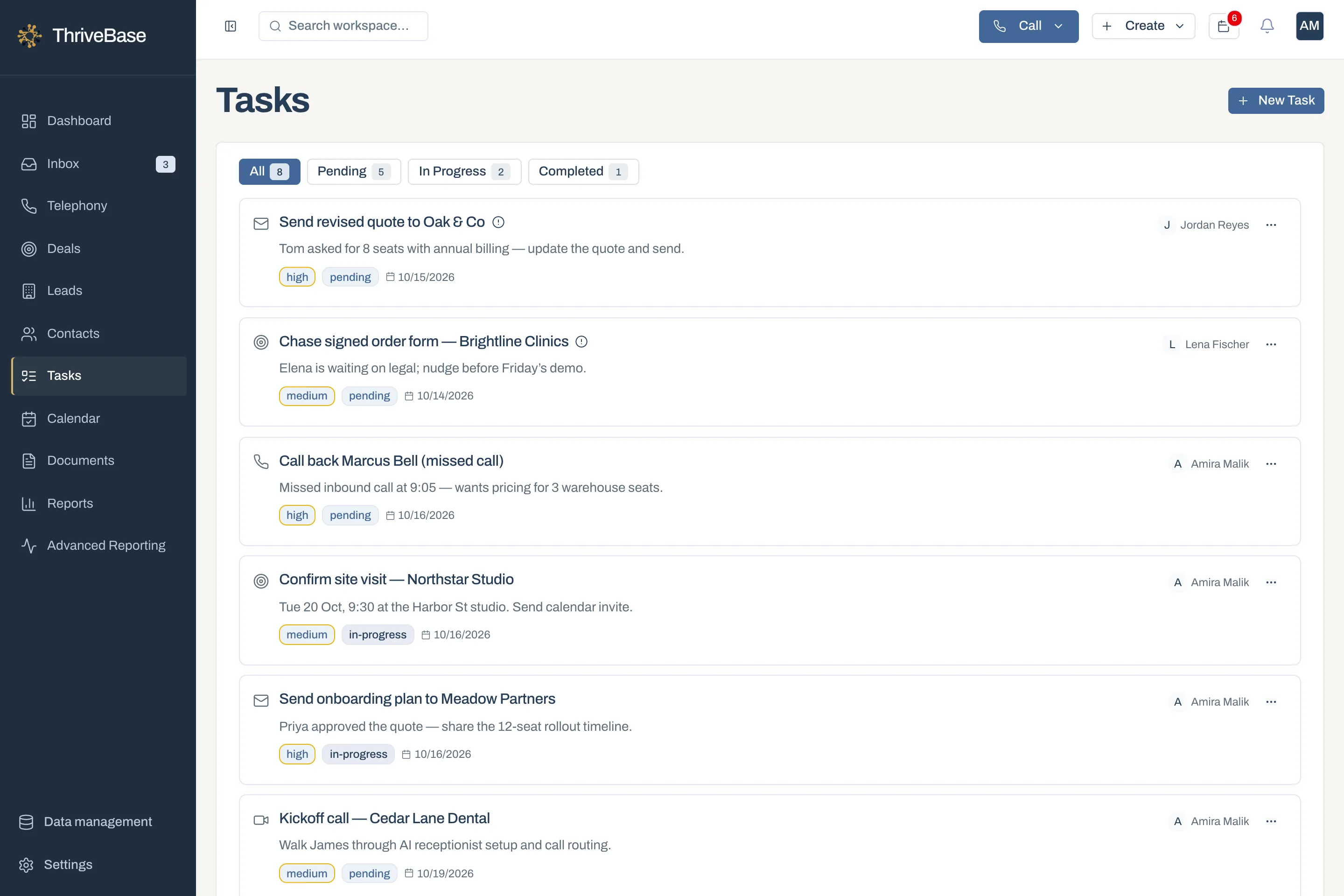
Tasks for calls, revisions and decisions
02
Keep the relationship after checkout.
Use contact history and follow-up tasks to carry the relationship beyond the first purchase. AI drafting can help prepare a reply when configured; the adviser reviews the details before sending.
Customer context for team handovers
Dated reminders for agreed check-ins
Sales outcomes reviewed alongside store data
Team handover
Everyone knows their part.
Sales adviser
Qualifies the lead, owns the deal and records the next action.
Customer care
Uses the agreed handover details to handle post-sale questions.
Founder or sales manager
Reviews open opportunities, overdue follow-ups and won deals.
What to measure
Check the change in your own business.
Lead ownership
Review the proportion of new leads with a named owner and a dated next action.
Sales progression
Compare qualified opportunities with won and lost outcomes over the same period.
Repeat opportunities
Use CRM records alongside store orders to review returning buyers and later projects.
Suggested review measures, not claimed results or a promise of built-in dashboards. Establish a baseline and compare consistent periods using CRM records, exports and your operational systems.
Yes. The workflow covers campaign and website leads, referrals, trade enquiries, sales conversations and repeat opportunities. General customer-care conversations can stay on the contact without becoming deals.
Lead sources need a supported, configured capture connection, an import or manual entry. This example does not imply native ad-platform, Shopify or WooCommerce synchronisation.
Keep checkout, inventory, fulfilment and cart recovery in your commerce tools. ThriveBase supports the lead, conversation, deal and follow-up workflow around them; automated order synchronisation is not assumed here.
The linked-phone flow connects your existing number by QR code. Team access follows your workspace permissions. Follow-up in this story means individual conversations and assigned tasks, not bulk WhatsApp broadcasts.
Research behind this scenario
Industry sources informed the business context. The example workflow is our application of that context to ThriveBase, not an endorsement by these publishers.
Business and consumer buyers take different paths. The scenario below separates quick enquiries from opportunities that need qualification and several conversations.