Illustrative case study · Marketing & creative agencies
An example business and workflow, informed by industry research. Not a customer testimonial or a claim of measured results.
The business
A creative agency selling campaigns, websites and ongoing retainers.
The team
A founder, a new-business lead and account managers.
The goal
Give each sales lead an owner, useful context and an agreed next action.
The starting point
Interest is coming in. What happens next?
The founder remembers the prospect’s ambition. The strategist has the discovery notes. The proposal sits in an email thread. When those pieces never meet, the agency can spend days proposing work before confirming the budget, decision-maker or timing.
Lead sources
Bring the opportunities into view.
Referrals and introductions
Capture who introduced the prospect and why they approached the agency.
Inbound enquiries
Bring form leads through configured capture or import, and add relevant email enquiries to the sales process.
Existing-client expansion
Record a new project or retainer discussion as its own opportunity while retaining the client relationship.
The workflow
Follow one opportunity through.
01
Record the reason for the enquiry
A referred retailer wants help launching a new range. The new-business lead captures the introduction, business context and desired launch date, then takes ownership.
02
Confirm there is a fit
Before preparing creative ideas, the team establishes objectives, budget range, decision-makers and timing. If the work is unsuitable, they record that outcome and respond clearly.
03
Run a focused discovery meeting
The discovery call goes into the calendar. The lead saves the agreed objectives, dependencies and unanswered questions, then assigns any follow-up research.
04
Share the proposal
The team prepares the scope and shares the proposal document. A deal records the expected value and current stage, while a task sets the next discussion date.
05
Follow up on the decision
The prospect requests a scope change. The lead records the revision, updates the deal and keeps the next action visible. A delayed decision gets a new agreed date rather than repeated unplanned chasing.
06
Hand over the commitments
Once the engagement is confirmed, the account manager receives the agreed brief, proposal and customer context. Project delivery stays in the agency’s delivery tools; a later review becomes a CRM follow-up task.
Inside ThriveBase
Qualify before you write the proposal.
Keep the commercial brief with the lead. A colleague should be able to see what the prospect wants and what still needs an answer.
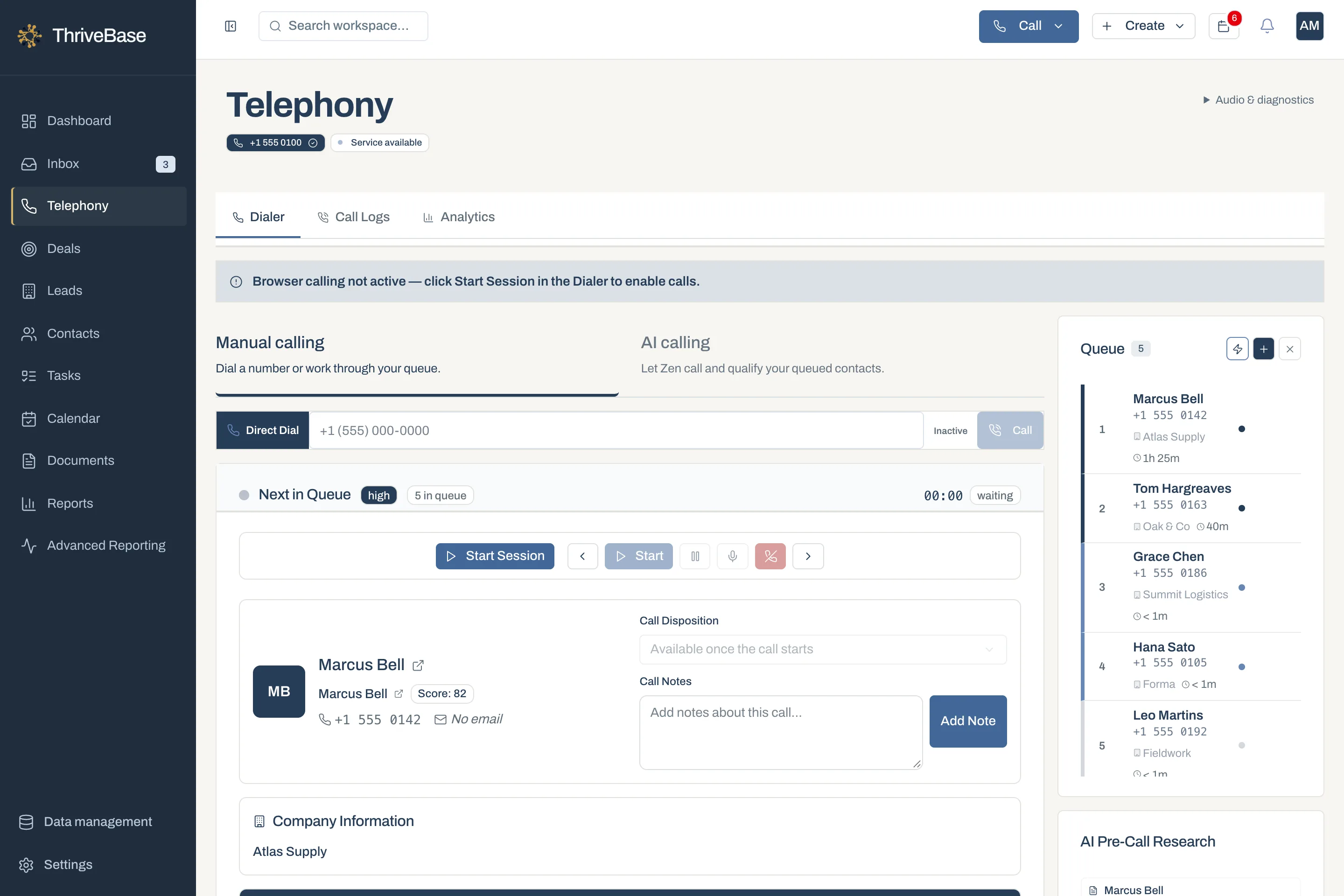
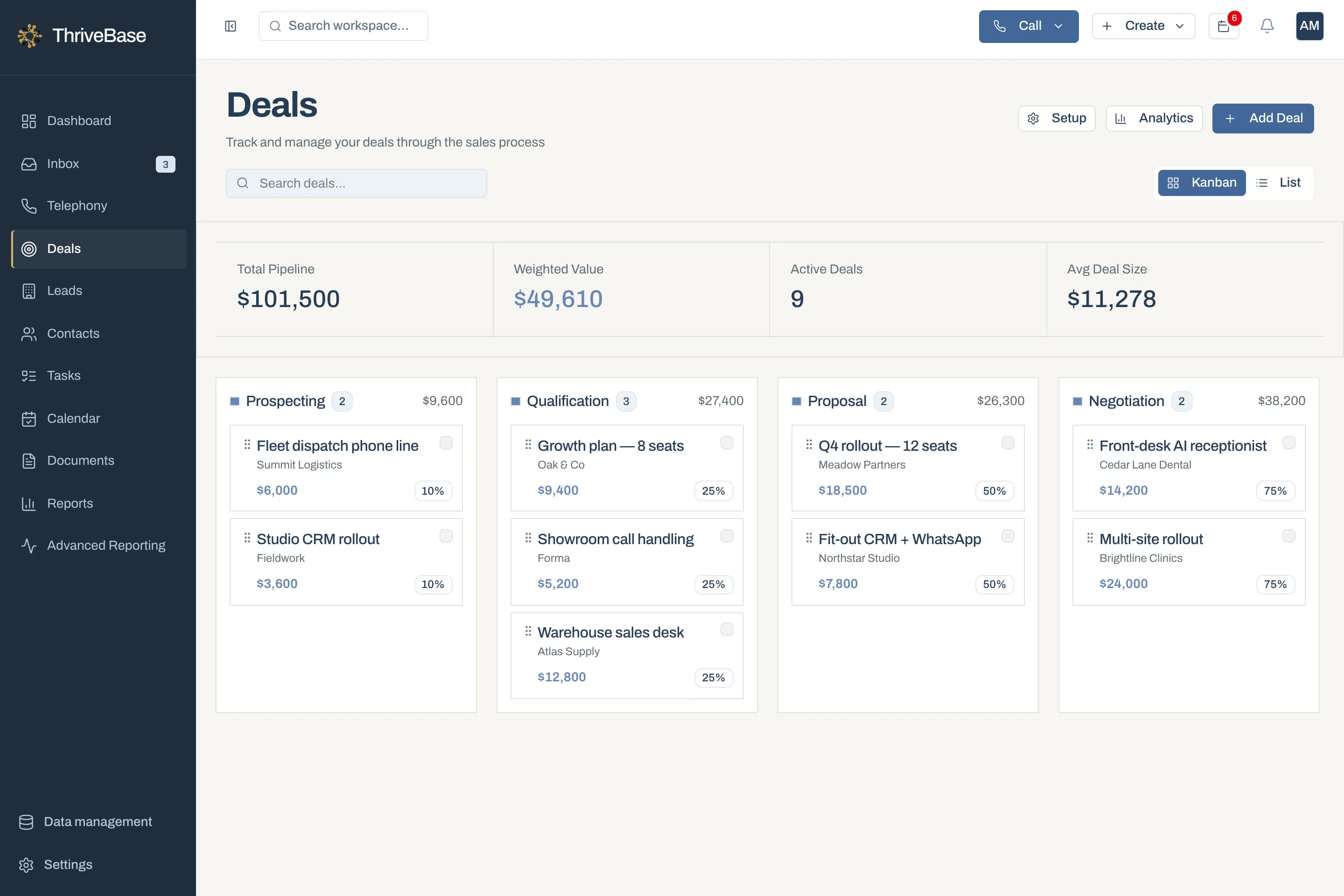
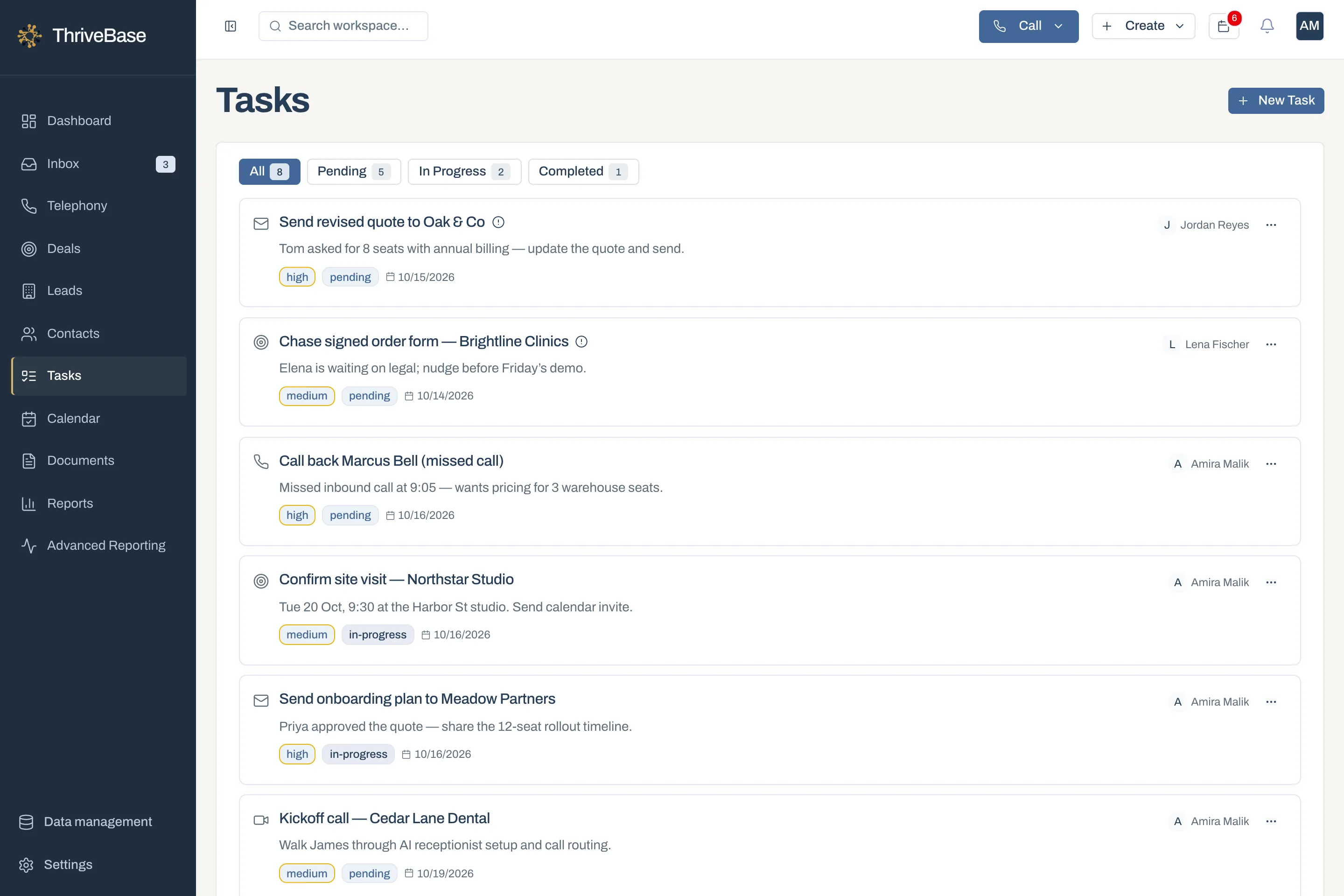
ThriveBase product screen with demo data. Illustrates the workspace, not the business or results described above.
01
Make the proposal a visible decision.
Track the deal while the proposal is being considered. Keep the next call and outstanding questions explicit so the opportunity does not disappear into an inbox.
Deal stage and expected value
Prepared proposal documents
A scheduled decision follow-up
02
Let the account team start informed.
Use the recorded brief and conversation history for the handover. When configured, AI can help draft a follow-up for human review; commercial promises stay with the team.
Shared relationship context
Tasks for handover commitments
Review dates for ongoing accounts
Team handover
Everyone knows their part.
New-business lead
Qualifies the prospect and maintains the opportunity.
Strategist or founder
Confirms scope and commercial fit.
Account manager
Takes over the agreed relationship and review schedule.
What to measure
Check the change in your own business.
Qualification quality
Review proposals issued with a recorded budget, timing and decision-maker.
Proposal decisions
Compare proposals with won, lost and still-open outcomes.
Handover completeness
Check whether new accounts have an agreed brief and named owner.
Suggested review measures, not claimed results or a promise of built-in dashboards. Establish a baseline and compare consistent periods using CRM records, exports and your operational systems.
This example covers new business and account relationships. Keep resource planning, production schedules and delivery tracking in your project-management tools.
No autonomous proposal or commitment is assumed. AI assistance depends on configuration and availability; your team prepares and approves the commercial details.
Research behind this scenario
Industry sources informed the business context. The example workflow is our application of that context to ThriveBase, not an endorsement by these publishers.